


September 9th, 2017
BOKONBAYEVO, Kyrgyzstan – Kyrgyz folklore is laden with stories that
warn its adherents against the over-hunting of animals. In one
foreboding tale, Kodzhodzash, the leader of the Ak-Bars tribe, brutally
ignores the wish of a female ibex, shooting dead her child and her
mate.“May your father cry over you as I cry over my murdered children
and for the loss of my kind,” the ibex curses, before luring the hunter
to his death.
Despite these admonitions, trophy hunting has become a lucrative
industry in Kyrgyzstan, drawing tourists from across the world with its
low prices and lax hunting laws.
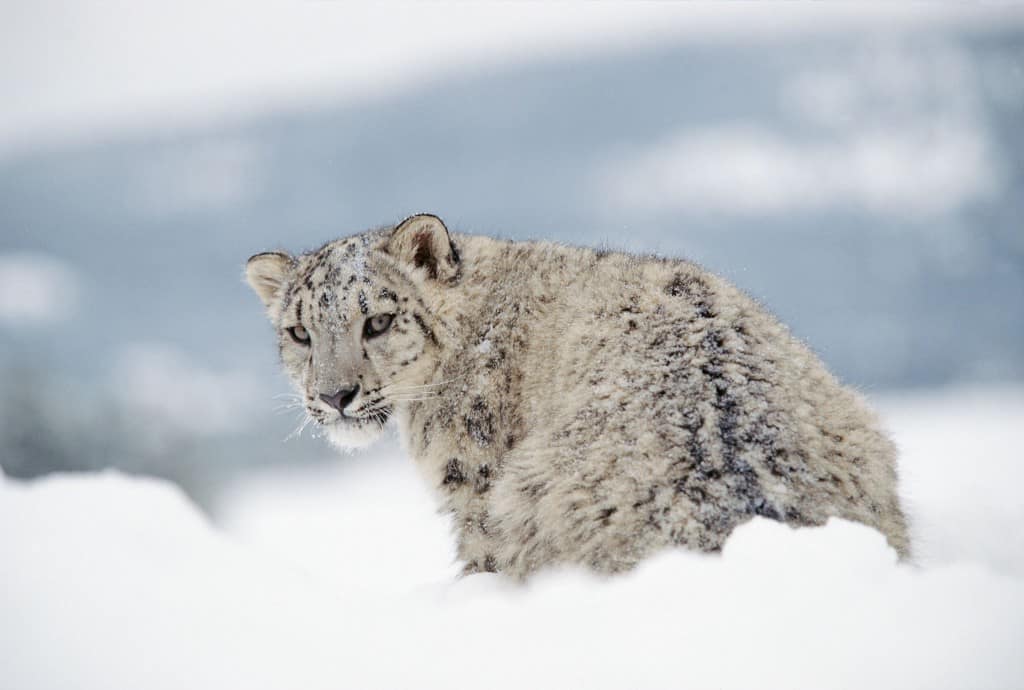
Both the Marco Polo sheep, a subspecies of the argali (Ovis ammon), and the Siberian ibex (Capra sibrica) can be found on the International Union for the Conservation of Nature (IUCN) Red List, with the former listed as Near Threatened.
The existing law in Kyrgyzstan does not prohibit the hunting of rare, threatened or endangered species. Instead, it states that animals listed in the Red Book of Kyrgyzstan, including the Marco Polo sheep, can be pursued by those in possession of a special license.
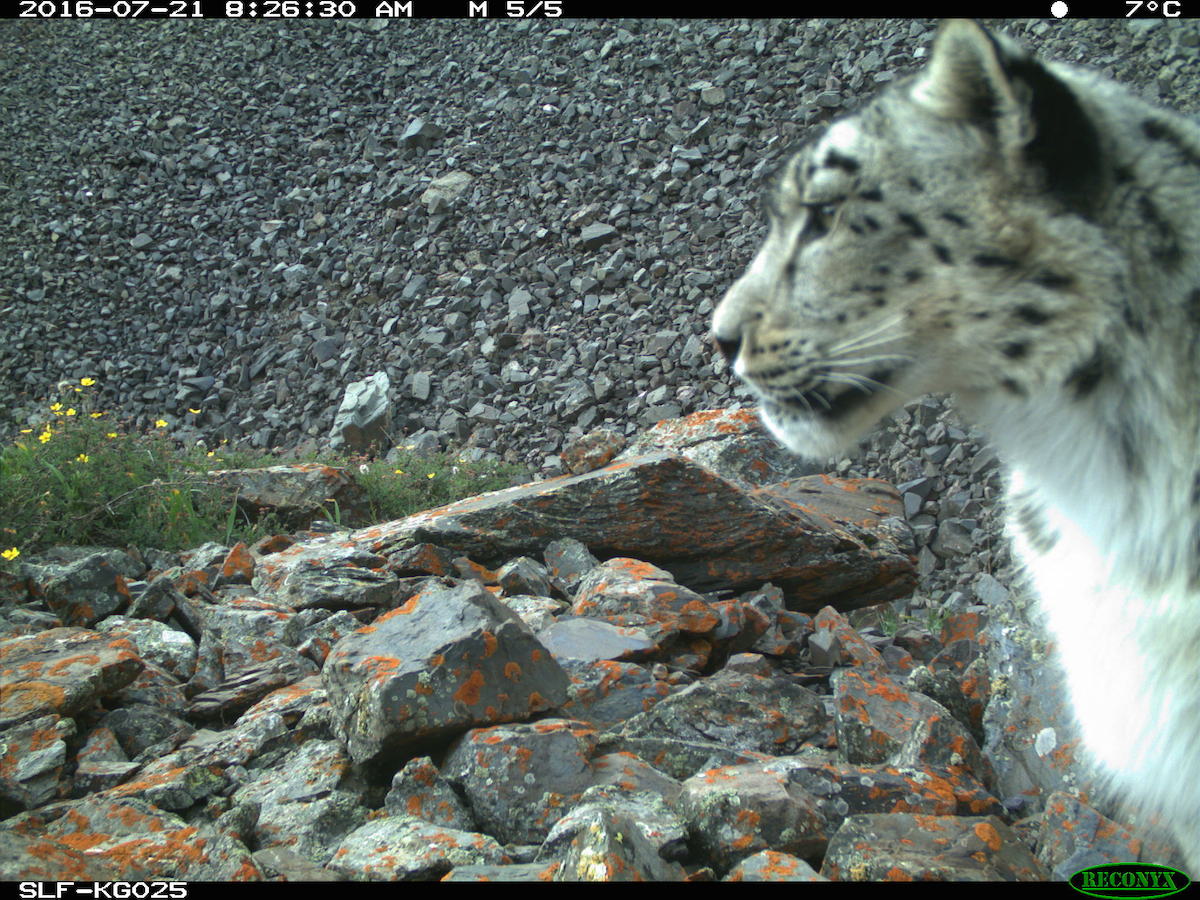
A camera trap captures a snow leopard in Shamshy Wildlife Sanctuary, Kyrgyzstan. Photo courtesy of the Snow Leopard Trust.

According
to the IUCN, there may be as few as 1,500 snow leopards reproducing in
the wild. Photo courtesy of the Snow Leopard Trust.
Scientists say preserving Kyrgyzstan’s snow leopard territory is key to the survival of the species as the country’s Tien Shan mountain range serves as a corridor between the northern snow leopard populations in Russia, Mongolia and Kazakhstan, and the more southerly groups in the Karakoram and Hindu Kush.
Yet despite its strategic location, 6 percent of the country has been given protected status by the government while 70 percent is classified as a hunting concession. As a result, local ecologists estimate that half of the country’s ecosystems have been affected over the last 25 years.

Siberian ibex in Shamshy Wildlife Sanctuary, Kyrgyzstan. Photo courtesy of the Snow Leopard Trust.
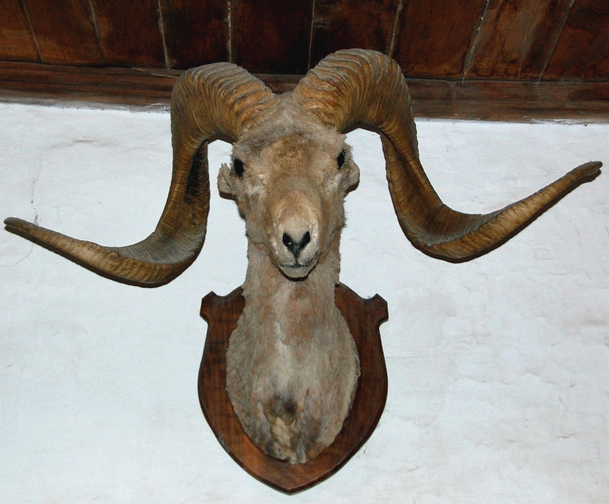
Bust of a hunted Marco Polo sheep (Ovis ammon polii). Photo by Maria Ly via Wikimedia Commons (CC 2.0).
In a letter to Mongabay, the assistant director of the State Agency on Environmental Protection and Forestry, Arsen Rysepekov, denied that the hunting industry, which it oversees, was having a negative impact on wildlife populations. He said sustainability is ensured through strict quotas on the number of hunting licenses granted to foreign tourists.
“Each year the Kyrgyz Republic, as agreed with the National Academy of Sciences of the Kyrgyz Republic, sets a limit of 70 Argali sheep to be hunted on foreign hunting tours,” Rysepekov wrote. “This number makes up about 0.5 percent of the overall number of such species.”
“The hunting department says there are controls, but sometimes people will come for one animal but are allowed to shoot two or three,” said Janar Akaev, a Member of Parliament who campaigned in favor of the hunting ban.
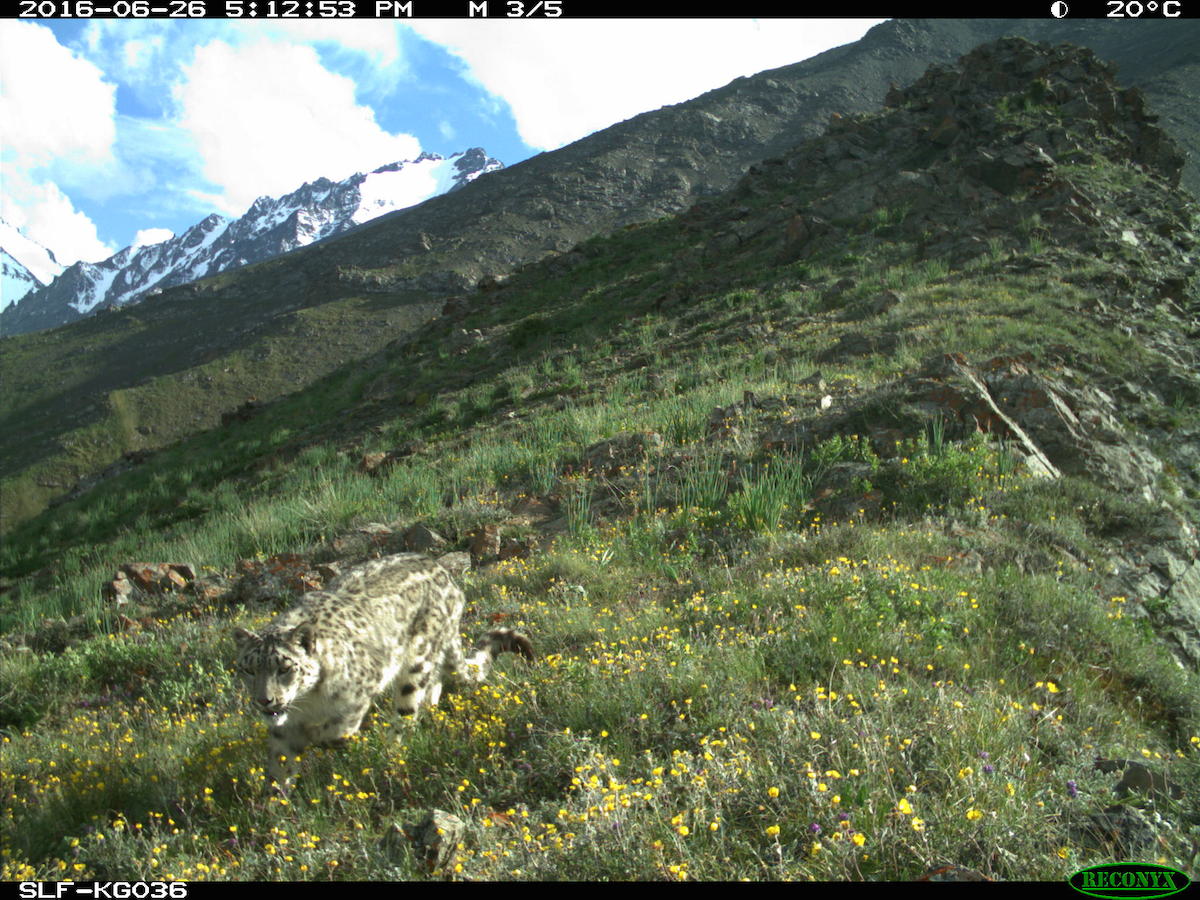
Genetic
analyses indicate snow leopards are more closely related to tigers than
they are to leopards. Photo courtesy of the Snow Leopard Trust.
“It is a very corrupt system,” Akaev said. “The same agencies that give out the hunting licenses own the hunting concessions and are therefore making all the money from the foreigners. That is why the state agency opposed the legislation.”
It is under these questionable financial circumstances that Kyrgyzstan’s national parks have struggled to make ends meet, with reports that rangers are woefully underpaid, undertrained, and under-equipped.
The State Agency on Environmental Protection and Forestry declined an opportunity to respond to these allegations of corruption.
However, in his written response, Rysepekov claimed the trophy hunting industry brought in nearly three-quarters of a million dollars in 2016, with some of that revenue allocated for the maintenance of rangers who protect the concessions from illegal poaching.
“If the proposed draft law was adopted, we would have had to finance [these rangers] from republican budget instead,” Rysepekov’s letter concluded.
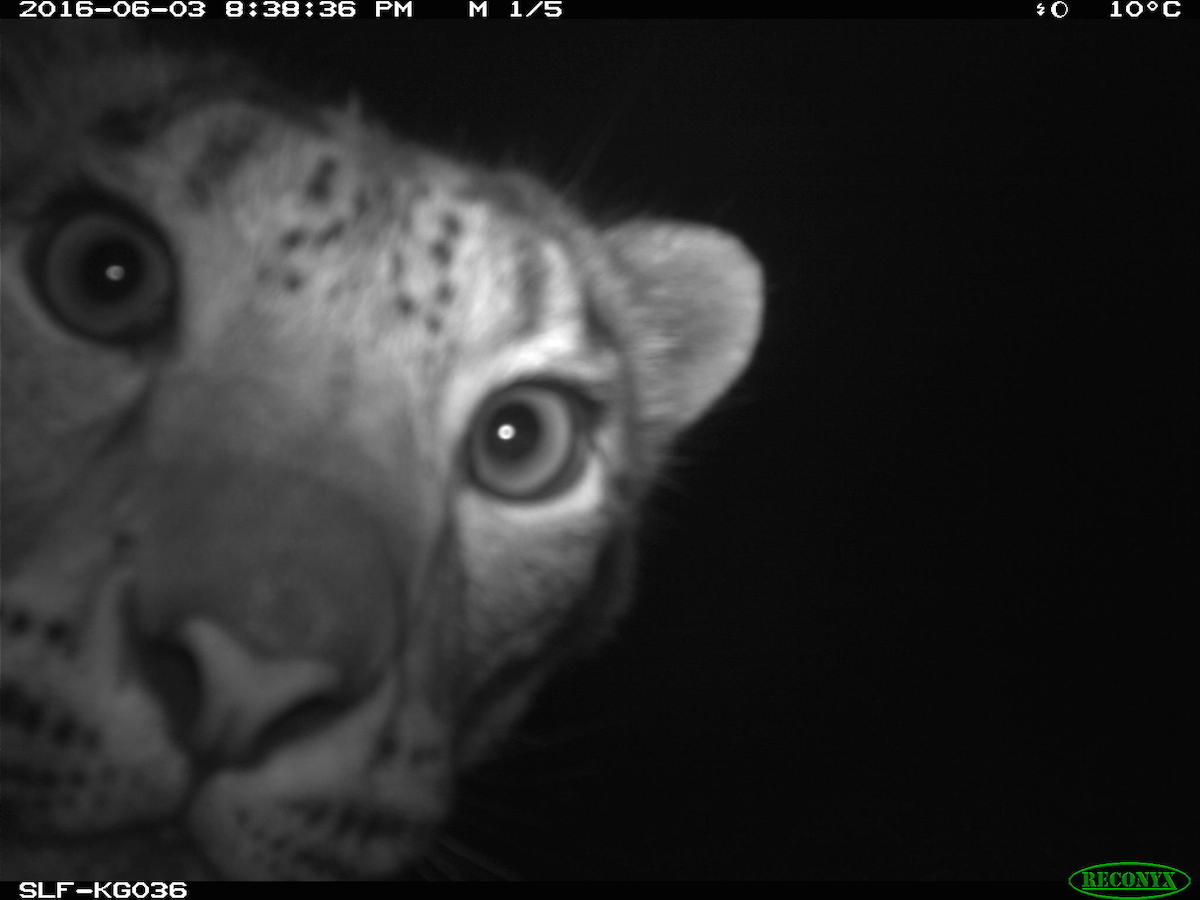
Boo! A snow leopard comes in for a nighttime close-up. Photo courtesy of the Snow Leopard Trust.
It lies within the crucial snow leopard corridor and proponents of the project say it has the potential to become a key part of their home range if its wild ungulate population can be increased.
It secured an early victory when a number of snow leopards were photographed within just a few months of its launch in 2016. The Snow Leopard Trust is currently using methods like drone technology and camera traps to estimate the size of their population.
As well as protecting the wildlife within its territory, Shamshy will host a field laboratory for snow leopard and biodiversity research, an eco-eduction site for adults and children, and a possible destination for eco-tourism. In doing so, the Snow Leopard Trust hopes to demonstrate that conservation can be a financially sustainable alternative to trophy hunting.
“If this proves to be a successful model then hopefully other concessions will try and emulate it in order to allow their wildlife populations to recover – assuming that at some point these concessions do get over-hunted,” said Charudutt Mishra, executive director of the Snow Leopard Trust.
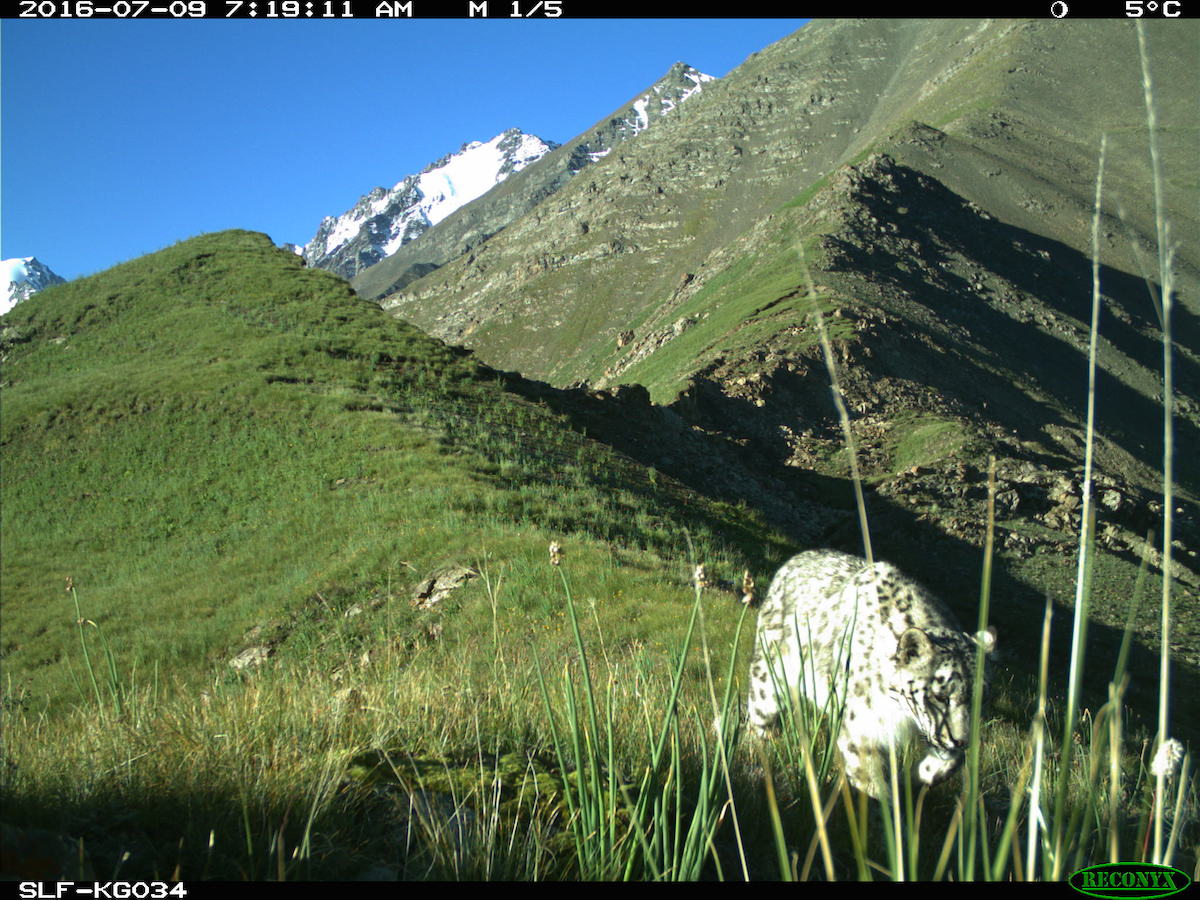
A snow leopard patrols its territory. Photo courtesy of the Snow Leopard Trust.
“We can never have a protected area that is big enough to secure a viable snow leopard population… but a combination of protected areas, community-based conservation and hunting concessions that work in sync with protected areas, could secure a population of a few hundred breeding snow leopards,” Mishra said.
Others however, remain convinced that Kyrgyzstan’s controversial trophy hunting industry will forever undermine efforts to revive its snow leopard populations.
“It is absurd that the government permits the killing of the snow leopard’s prey yet gives thousands of dollars to protect the snow leopard,” Shukurov said.
“You cannot feed the snow leopard money.”
This article by Morgan Erickson-Davis was first published by Mongabay.com on 31 Aug 2017.
We invite you to share your opinion whether trophy hunting in Kyrgystan should be banned? Please vote and leave your comments at the bottom of this page.

Đăng nhận xét