


Inside the once-busy lodgings that have become modern ruins.
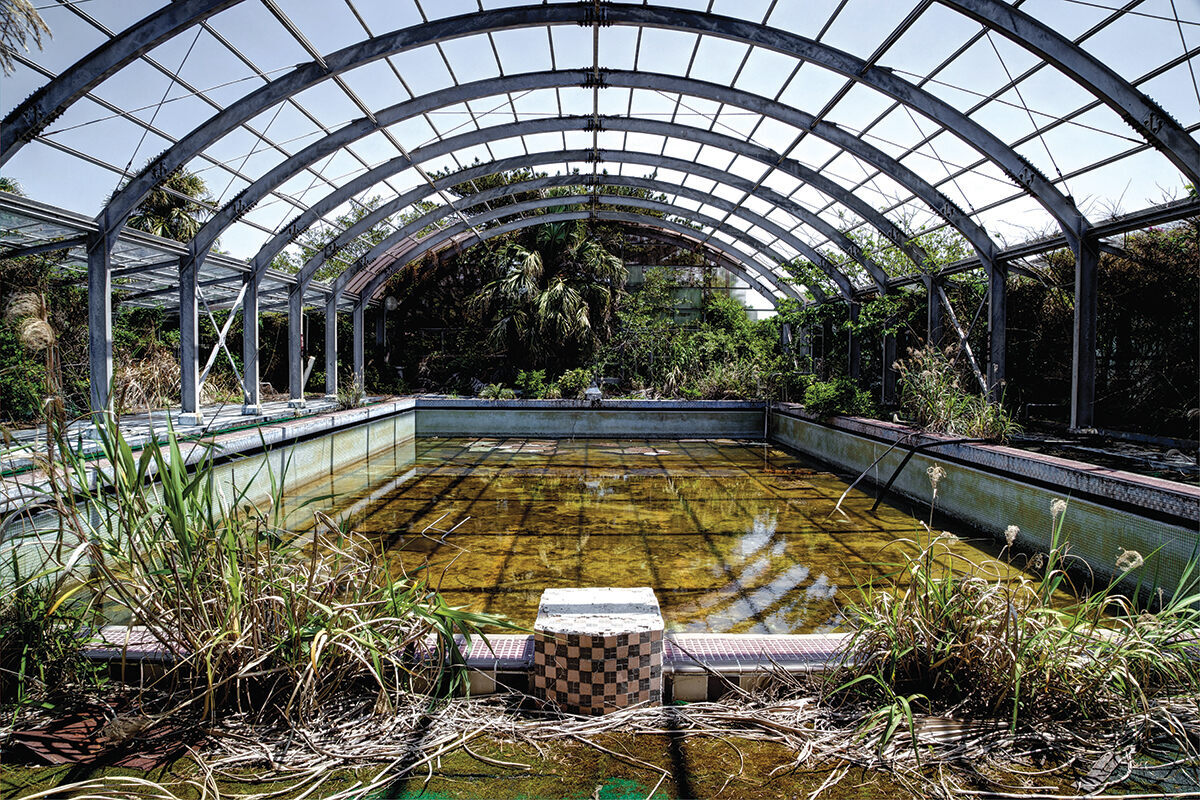
Of all the abandoned hotels that photographer Shane Thoms captured for his book Haikyo: The Modern Ruins of Japan,
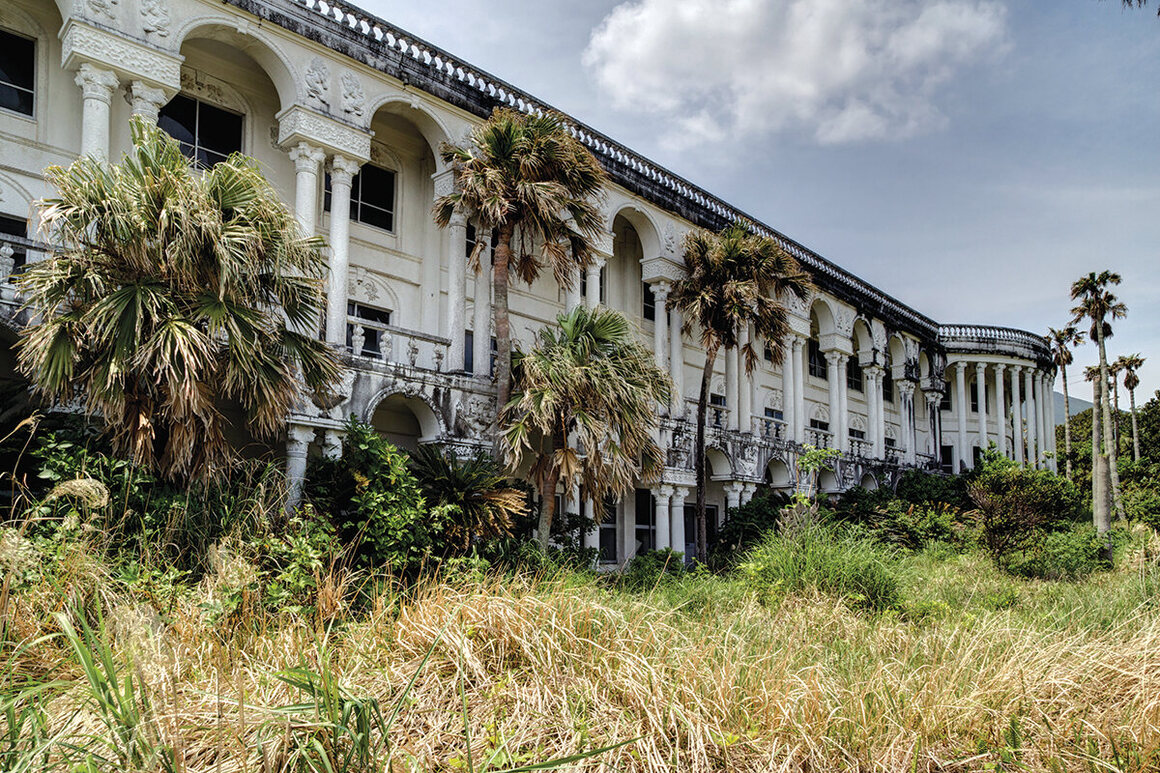
the one he finds most compelling is the Royal Hotel. A vast, ornate,
crumbling structure on the volcanic Hachijo Island, it has everything
Thoms wants from a ruin. “Exploring this marvelous, massive and haunting
structure was just like stepping into a Tim Burton film set,” he says.
“Darkly enchanting in all the right ways, it harks back to my early
beginnings in that I could once again fulfill my playful fascination
with the macabre and experience a magically creepy place—I was so in
love.”
As a child, Thoms was fascinated by the unsettling environments of horror films like Nightmare on Elm Street. “I was heavily drawn to the darkness and danger of any space that resembled Elm Street’s huge labyrinthine boiler room or Candyman’s
dilapidated and derelict urban project housing.” He began to sneak into
empty buildings for “some kind of thrilling, creepy experience for
myself.”
Thom’s interest deepened when, in his
twenties, he began to photograph abandoned buildings. He realized that
they were more than just eerie spaces with broken windows. “These empty,
former lived-in spaces became realms where human emotion and energy
still lingered,” he says. “Each item in the space had been left like a
prop on a stage where the observer could sit, watch and ponder the
past.”
In Japanese, haikyo means both
ruins and the urban exploration process of tracking down those
abandoned, overgrown spaces. Thoms’s book focuses on Japan’s
now-derelict spaces that once housed modern life: apartments, mines and,
of course, hotels and leisure facilities. This includes not just the
once-splendorous Royal Hotel, but also deserted onsens and one
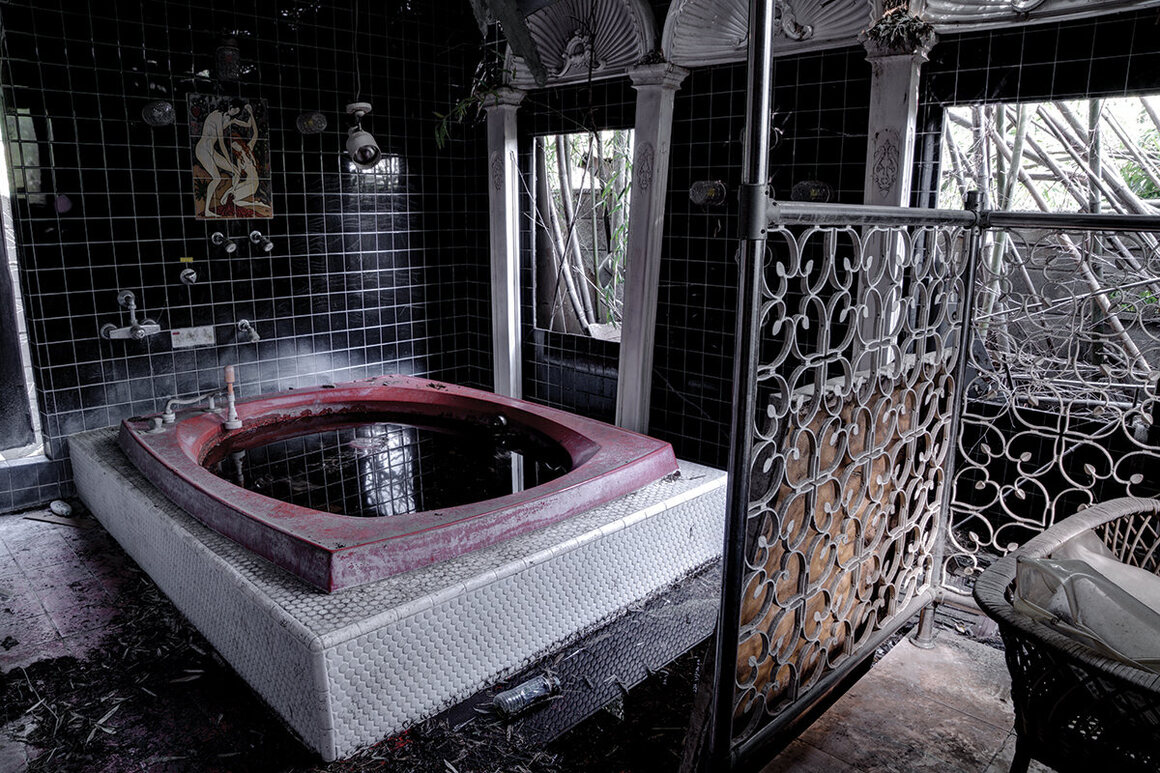
of Japan’s “love hotels”, the Fuu Motel. Here, rooms that were once
hired on an hourly basis now have branches growing through the windows.

Even these encroaching weeds are
appealing to Thoms. “Kudzu vine is considered a pest,” he says, but he
still finds it “very beautiful and attractive. Seeing gigantic
rollercoasters covered in kudzu vine is a truly magical experience and I
adore it.” (One of Japan’s most famous ruins—also in the book—was Nara Dreamland, a Disney-inspired amusement park that is currently being demolished.)
Not all the nature he experiences is so
appealing, however. When shooting, Thoms keeps a wary eye out for
Japanese giant hornet nests, which can be found in many abandoned
buildings. “They attack in numbers and can be fatal and very painful.”
He is also very careful about potential structural issues and asbestos
hazards.
For Thoms, photographing these abandoned
spaces has a purpose beyond his own enjoyment. There is “an importance
in documenting these spaces before the process of urban evolution (ie.
demolition) erased it forever”, he notes. “I feel that much can be
learned about ourselves and society by documenting the hidden fragments
of our urban past.”
AO has a selection of images from Haikyo: The Modern Ruins of Japan.


Đăng nhận xét